
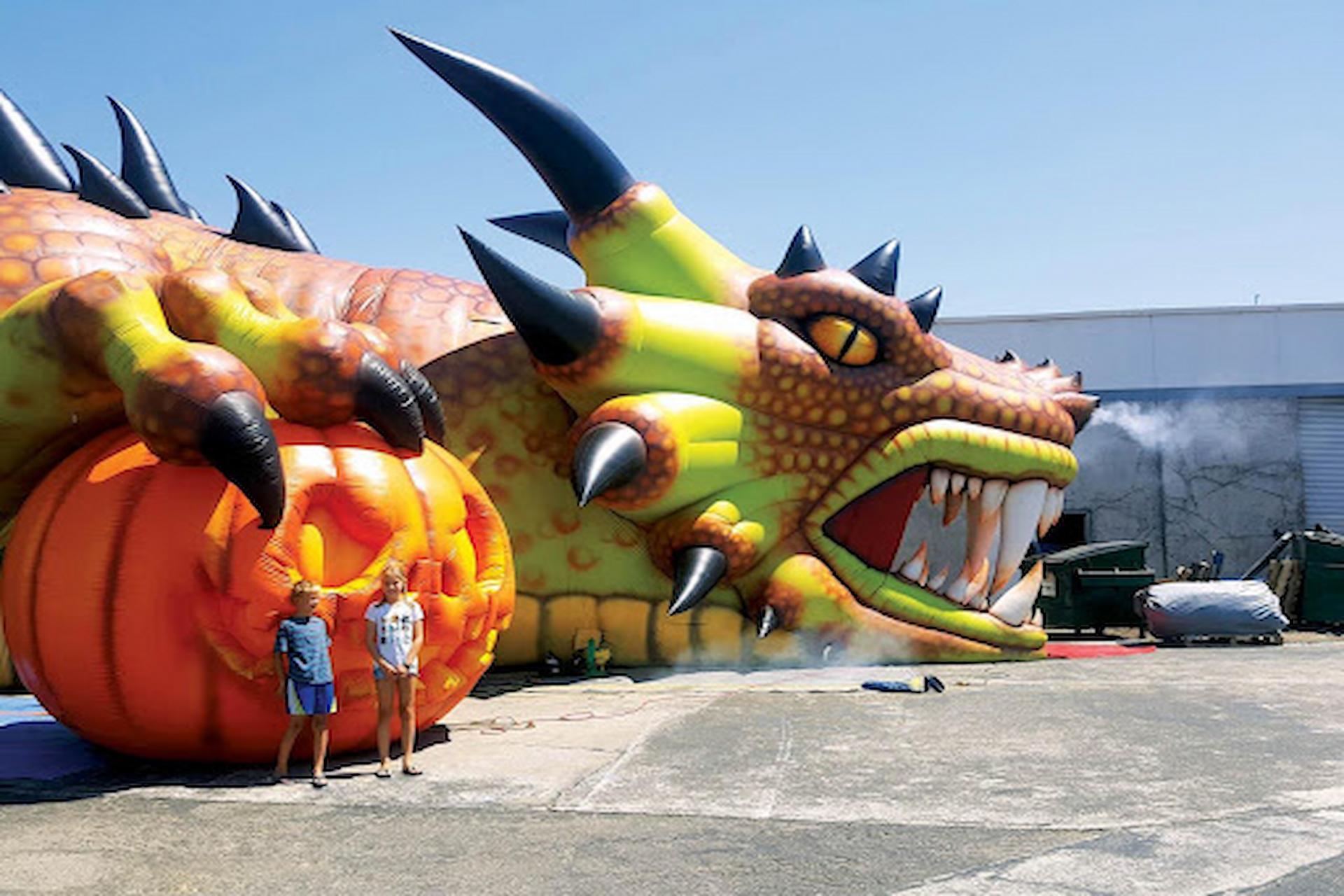
Custom inflatables are more than eye-catching promotional tools—they’re carefully engineered to combine creativity, safety, and durability. Behind every design lies a blend of material science, structural engineering, and safety testing. This article explains how professionals craft inflatables that last, ensuring businesses can rely on them for both impact and performance.
At first glance, Custom Inflatables used at events or promotional campaigns may appear to be all about colour, size, and striking design. Their bold shapes and eye-catching presence instantly draw attention, creating memorable experiences for audiences.
However, behind this impressive exterior lies a great deal of engineering and scientific planning. These inflatables are not simply decorative objects but carefully structured products designed to withstand repeated use, varying weather conditions, and heavy interaction. Every stage, from selecting durable fabrics to testing air retention and stability, ensures they remain safe and reliable. Engineers consider air pressure, seam strength, and anchoring systems to guarantee they perform consistently in different environments. What seems effortless from the outside is the result of precision, safety standards, and innovative design. Inflatables, therefore, combine creativity with functionality, making them powerful tools that deliver impact without compromising durability or safety.
Choosing the Right Fabrics for Strength and Safety
The choice of materials is the foundation of inflatable engineering. Designers select fabrics and coatings that ensure flexibility without compromising strength. Most professional-grade inflatables use reinforced PVC or high-density nylon. These fabrics are coated to resist UV damage, moisture, and tearing.
Strength testing is carried out on every roll of fabric before production begins. This ensures consistency across large inflatables that may stretch several metres in height and width. Without strong base materials, even the most creative design would quickly fail under stress.
Structural Engineering Principles
Inflatables may appear soft and lightweight, but they rely on the same structural rules as traditional buildings. Air pressure inside the inflatable works like an invisible skeleton, distributing stress evenly across its shape.
Designers run simulations to check for weak points. Stress is highest at seams and anchor points, so these areas receive extra reinforcement. Double or triple stitching is standard, and heat-sealed seams are common for water-resistant designs. By applying engineering principles, the inflatable remains stable even in variable conditions.
Anchoring and Stability in Different Environments
An inflatable must remain secure in unpredictable conditions. Whether placed indoors or outdoors, stability is critical. Designers build in anchor points that are carefully balanced to hold weight and tension.
- Outdoor inflatables include heavy-duty tie-downs and ballast systems.
- Indoor inflatables rely on lightweight anchors that preserve floor surfaces.
- Larger installations may integrate multiple stabilisers to reduce sway in windy conditions.
This ensures the inflatable remains upright, safe for users, and visually impactful throughout an event.
Safety Testing Standards
Safety is central to inflatable engineering. Manufacturers follow strict testing procedures before approving a design for public use. These tests cover:
- Flammability resistance: Materials are treated to reduce fire hazards.
- Load capacity: Ensuring the inflatable holds its shape under pressure.
- Air retention: Seams and valves are tested to prevent leaks.
- Environmental impact: Fabrics are checked for resistance to heat, rain, and UV rays.
Each stage of testing is designed to avoid accidents, ensuring inflatables are suitable for all audiences.
Durability for Long-Term Use
Durability is not just about surviving one event. Businesses expect Custom Inflatables to last for repeated use. That’s why durability testing is crucial. Exposure tests simulate months of outdoor weathering in just a few weeks, allowing manufacturers to refine coatings and seams to extend lifespan.
Maintenance also plays a vital role. Designs are created with cleaning in mind, using fabrics that resist stains and can be packed away without damage. This balance of durability and convenience ensures inflatables remain cost-effective for businesses, offering both reliability and long-term value.
The Science of Airflow and Pressure
Air circulation is carefully controlled in the inflatable design. Blowers and pumps are chosen according to the size and structure of the inflatable. For sealed designs, the internal air must remain constant over long periods. For continuously inflated structures, pumps deliver steady airflow to maintain shape.
Engineers calculate the exact pressure levels required. Too much pressure can damage seams, while too little causes instability. By controlling airflow, inflatables maintain structural integrity while remaining safe for users.
Customisation Without Compromising Safety
Businesses want inflatables in unique shapes—from oversized mascots to branded arches. The challenge for engineers is achieving creativity without risking safety. Each design is tested through digital modelling to ensure it can be scaled without losing stability.
Fabric panels are cut and stitched to exact specifications, preventing distortion. Even when creating unusual shapes, the engineering team ensures that air distribution, anchoring, and reinforcement remain effective.
Conclusion
In conclusion, the creation of inflatables is far more than just bold colours and striking shapes—it is a careful balance of creativity and engineering. Every element, from the choice of durable fabrics to the calculation of air pressure, is designed with safety, reliability, and long-term performance in mind. Seam strength, stability, and resistance to environmental conditions are all critical factors that ensure these structures remain dependable, whether used once or repeatedly across different events. This scientific approach guarantees that inflatables are not only visually impressive but also practical, robust, and safe for diverse settings.
For organisations aiming to stand out with unique, eye-catching displays, Custom Inflatables provide an ideal solution. They combine imaginative design with tested engineering, making them powerful promotional tools that deliver impact without compromising safety or quality. Ultimately, behind every inflatable lies a blend of science, precision, and innovation that ensures lasting value.