

Key Takeaways
- Car insurance rates are based on risk factors like vehicle type and driving record, not color.
- Stolen personal items from a vehicle are not covered by car insurance, but homeowners’ or renters’ insurance should help.
- State-minimum coverage often leaves you exposed to major financial losses in serious accidents.
- Mature drivers with clean records usually pay less, not more, until advanced age-related risks appear.
- Comprehensive insurance covers non-collision events but not mechanical failures or maintenance.
- Your credit score frequently impacts your insurance premium unless restricted by state law.
- Car insurance typically follows the insured vehicle, not the person driving it.
- No-fault insurance streamlines payouts but doesn’t eliminate the possibility of being found at fault.
Introduction
Car insurance is essential for every driver, yet widespread myths often cloud the world of coverage, claims, and costs. Falling for these misconceptions can lead to buying unnecessary policies, being underinsured, or spending too much money. To help you navigate these confusing waters, it’s important to look past what you’ve heard and focus on the facts. For drivers seeking accurate guidance and personalized rates, getting an AAA insurance quote can illuminate what truly affects your coverage options and costs.
Misguided beliefs, like the impact of car color on insurance premiums or misunderstanding what comprehensive coverage entails, can have real financial consequences. Not only can myths keep you from the best policies, but they might also leave you vulnerable in case of accidents or theft. That’s why clearing up these common misunderstandings is crucial, especially with so many options available through reputable providers.
The intent of this article is to lay out the most prevalent car insurance myths and separate fact from fiction. The right information isn’t just empowering—it could save you hundreds of dollars and plenty of headaches down the road. Understanding the truth about coverage, claims, and costs will help you make informed decisions and get the protection you need.
If you want to further your understanding of how insurance works, the Insurance Information Institute provides clear and reliable resources for consumers on the fundamentals of car insurance.
Myth 1: Red Cars Cost More to Insure
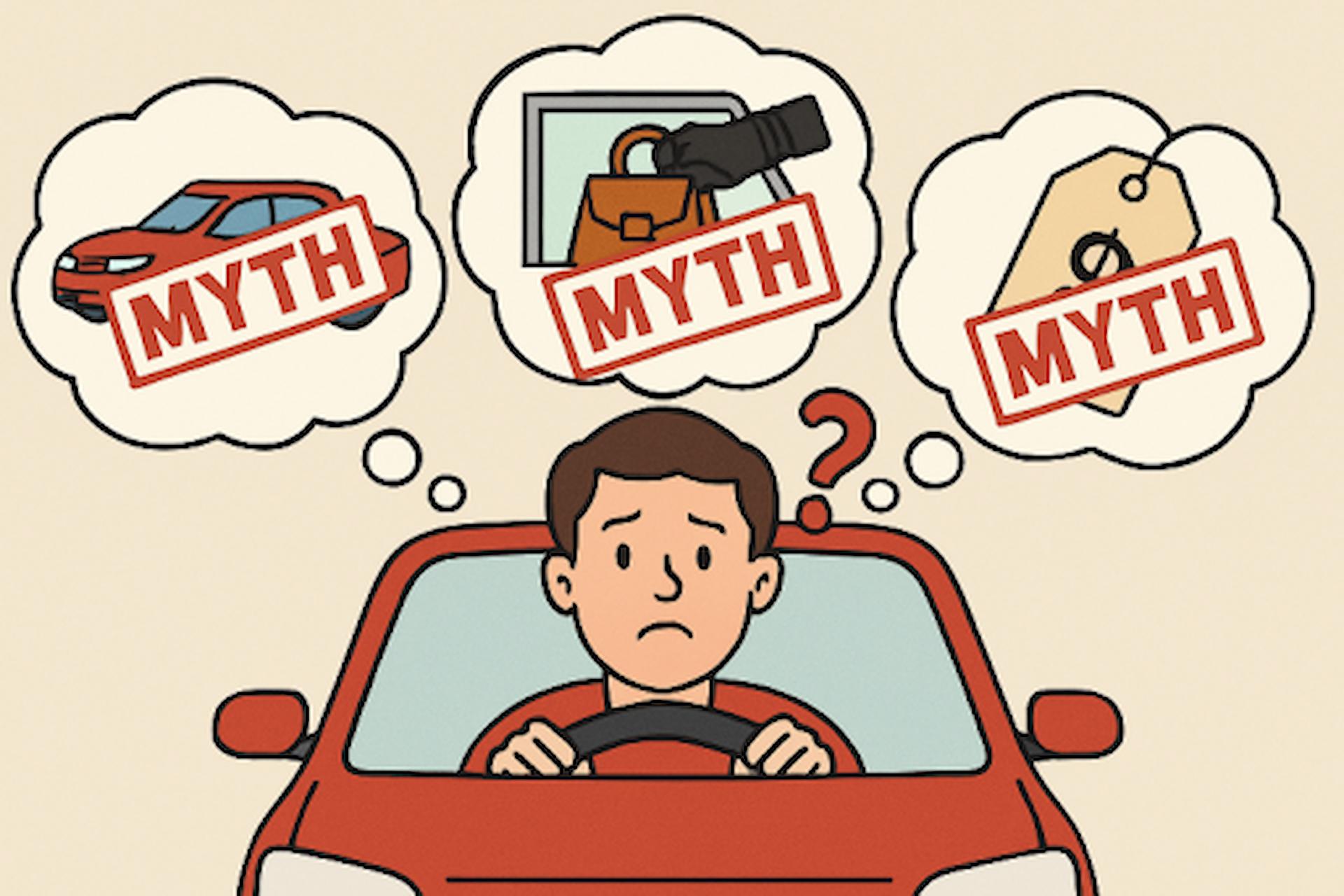
It’s widely believed that red cars are more expensive to insure because they attract more attention and, supposedly, more speeding tickets. However, insurers pay no attention to your vehicle’s paint color when calculating rates. Instead, underwriting decisions focus on the make, model, safety features, engine size, claim history, and even your ZIP code. The myth likely persists due to red’s reputation as a “fast” color, but you can confidently choose any hue without worrying about a higher premium.
Myth 2: Personal Belongings Stolen from Your Car Are Covered
Many drivers assume their car insurance will reimburse them if their laptop, purse, or other personal items are taken from their vehicle. In most cases, this isn’t true. Auto insurance—liability, collision, or comprehensive—typically covers only the vehicle and its permanent fixtures. For stolen belongings, you’ll need to rely on your homeowners or renters insurance, which generally includes personal property coverage, even when items are stolen from your car.
Myth 3: Minimum Coverage Is Sufficient
It may seem prudent and budget-friendly to opt for only the state-mandated minimum liability insurance. However, these limits can be dangerously low. A major accident can rapidly exceed the basic property damage and bodily injury caps, leaving you personally responsible for additional costs. To safeguard your finances and meet the rising expenses of medical care and repairs, consider selecting coverage above the minimum requirements.
Myth 4: Older Drivers Always Pay More
Younger, less experienced drivers are often charged higher rates, which leads some to believe older adults automatically face similar increases. While premiums could rise for elderly drivers over time due to health or vision concerns, most mature drivers with a clean record may actually qualify for discounts. Insurers typically reward experience, particularly when paired with a safe driving history. Age alone is not a penalty; driving habits play a much bigger role.
Myth 5: Comprehensive Coverage Handles All Repairs
Comprehensive coverage protects your vehicle from damages outside of a collision—think theft, fire, vandalism, and extreme weather. However, it’s not a maintenance contract. Issues such as engine failure, worn brakes, or transmission trouble typically aren’t covered. For those repairs, you’ll still need to budget for regular maintenance and consider mechanical breakdown insurance or an extended warranty if you’re concerned about unexpected expenses.
Myth 6: Your Credit Score Doesn’t Affect Your Premium
Insurers in many states use your credit score as a factor in setting rates, based on historical data showing those with lower credit scores are statistically more likely to file claims. While a few states prohibit this practice, in most of the U.S., your credit history can play a substantial role in your car insurance premium. Improving your credit score could therefore directly lower your costs. Check your state’s laws to see how this rule might apply to you.
Myth 7: Insurance Follows the Driver, Not the Car
Many believe that car insurance is attached to the person driving rather than the vehicle itself. The reality: Insurance follows the car. If you lend your vehicle to a friend and they get into an accident, your policy is typically the first to cover the damages. This could impact your premiums or even result in higher payments should a claim be filed, regardless of who was behind the wheel.
Myth 8: No-Fault Insurance Means You’re Not at Fault
No-fault insurance simply refers to a system where, after an accident, your own insurance pays for your injuries and damages, regardless of who caused the incident. It doesn’t mean you’re not at fault or immune from lawsuits. No-fault policies are meant to speed up the claims process and reduce court involvement. However, legal responsibility (and potential financial liability) can still be determined and contested in serious accidents.
Final Thoughts
Understanding the truth behind common car insurance misconceptions empowers you to make better financial and coverage decisions. Misinformation can lead to unnecessary expenses or gaps in protection. By staying informed, asking the right questions, and reviewing your policy regularly, you ensure that your coverage truly fits your needs. Don’t let myths guide your choices—base them on facts and expert advice to protect yourself and your vehicle effectively.